

Stoicism has been our compass for navigating the inner landscape, helping us distinguish between what is (external reality or judgments and imaginations about it) and what truly matters for our tranquility (ataraxia).
We’ve explored how Ego crafts deceptive narratives to manage our perception. It seeks comfort in certainty or pain in its opposite – the perceived threats of judgment.
Now, let’s talk about a fundamental Stoic practice for taming the Ego: Stepping Back From thought. It’s less about stopping thoughts, much as Marcus Aurelius or Epictetus might desire if it were that simple, and more about cultivating a detached perspective on them.
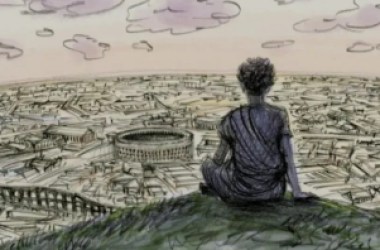
We call this the Silent Observer: an internal witness that can watch our inner turmoil without necessarily collapsing into it.
What Exactly is “The Witness Within”?
Think of the Silent Observer as a shift in perspective. It’s not an entity, like a Buddha or God-consciousness, that suddenly appears and takes over. Think of it more dynamically.
Epictetus famously said we must ask, “What disturbs me?” He understood that our reaction to things (imagination seeking certainty) often stems from errors in judgment about them.
The Witness isn’t the judgment itself, but it’s the state of mind that allows us to observe our thoughts (imagination’s creations) occurring, without immediately labeling them as “mine,” or feeling dominated by them.
It’s akin to stepping out of the immediate drama of judgment (prohairesis distinguishing appearances) and watching it play on a screen inside us.
Like the Stoic saying about not being disturbed by external events, but rather by our false judgments or interpretations of them, the Witness makes this separation possible. It’s a pause between stimulus (input) and response (reaction). A moment of inner silence that allows reflection.
Why Does the Ego Resist Being an Observer?
This is crucial. Our “default” setting, cultivated by our inherited belief systems (matrix), often wants us to believe. Ego craves certainty. It seeks validation, comfort, and safety.
Our previous exploration suggested that Ego operates partly in the shadows (False Narratives), using imagination to fill gaps. Now, think of Ego also wanting certainty – a narrative where it feels good. But Stoic judgment doesn’t grant Ego wishes; it highlights illusions.
Stepping Back is Threatening to Ego: When you practice stepping back from thoughts ( as counter-illusion), it directly conflicts with Ego’s drive to immediately engage, react, or believe its own narratives (Protagoras focus: what feels true). Ego likes the certainty that comes from believing a story (I am important) or seeking validation (“Are you sure about this?” implies acceptance). Stepping back means questioning that certainty, which makes Ego feel insecure or uncertain of its preferred narrative. It exposes the shaky foundations upon which those narratives are built (Logos vs belief systems).
The Conflict of Interest: Witness vs Ego
The core conflict unfolds:
- Ego’s Narrative: “This meeting was a disaster! Everyone thinks I’m terrible!” (A story used to protect its version of reality).
- Stoic Judgment: “This meeting was a thing that happened. Its outcome is external input, not necessarily affecting my inner state (prohairesis). It’s a possibility. I need to ask, ‘How does this serve me? Am I interpreting it correctly?’ “
- Witness Perspective: Standing behind the judgment, observing the thought “Everyone thinks I’m terrible.” without accepting it as fact or allowing Ego to completely dominate the feeling. The Witness isn’t judging Ego; it’s simply observing its state.
This conflict reveals the limitations of our “cultural” or inherited sense (belief systems) of self. It allows us to see that the distress often comes from our reaction (imagination) rather than the event itself. By stepping back, we distance ourselves from Ego’s potentially detrimental deceptions and focus on what is truly within our control, or not even illusion.
Stepping Back as a Radical Stoic Tool
Stepping back from thoughts (Negative visualization counter-position) isn’t passive resignation. It’s an active process of epistemological humility – recognizing the vast difference between our perception (imagination) and objective judgment or knowledge. It allows us to see:
- Our Thoughts as Products: They are constructs built from past experience (belief systems), societal filters, or imagination. Epictetus would agree that none of these equate to solid judgment.
- Fear/Desire as Filters: Often, stepping back reveals that emotions like fear (disorder) or desire are driving the narrative rather than reality. Example: Fear might make us imagine worst-case scenarios (everyone hates me) even when judgment confirms it’s merely a possibility or probability. Stepping back allows us to query the fear itself.
- Attachment Pointing: It helps identify where our attachment to a particular narrative or perception is causing suffering, thus preventing it from being the locus of our distress (iron determination vs fear-based ego).
My Practical Exercise Example
Imagine you receive critical feedback on your work, likely coming from Ego (Protagoras focus) rather than judgment. The “default” response might be:
- Ego Reaction: Immediately feel defensive or humiliated. Maybe think, “They personally hate me.” (“False Narrative”).
- Stoic Judgment: Recognize the feedback as an external event, “Negative input received.” It doesn’t inherently define your worth or their opinion of you as a human being.
Witness Practice:
- Take a deep breath consciously.
- Notice the sensation of thought: “They personally hate me.” This requires a different cognitive stance (Logos influencing prohairesis). Observe it, like seeing a thought float by. It’s your thought about their perception.
- Ask yourself: Is this sensation arising from external reality (input) or my internal state (perception)? I know, judgment requires distinguishing between things within our control and without.
- See it as a story: “The narrative ‘They personally hate me’ has started.” It’s not necessarily true, but it is happening in my mind (imagination).
- Experience the gap between thought and reality, or belief.
Practicing this Witness allows you to see Ego’s tendency towards illusion without getting swept away by it. It’s a mental discipline.
The Actionable Take-away
So, how does one actually practice “stepping back”?
- Become the Conscious Pause: When strong emotions arise, instead of immediately acting or judging (imagination runs wild), consciously take three deep breaths. This simple physiological act can buy seconds (at least) for observation.
- Start Observing the Emotion: Ask, “Am I feeling [intense emotion] because of something external (input) or because my internal perception (imagination) is coloring it incorrectly?” This shifts the locus from Ego’s reaction towards judgment.
- Question Your Core Narrative: “What story is my ‘cultural mind’ telling me right now?” Write it down. Does judgment support its core assumptions? Is your distress stemming from Ego’s narrative or external reality?
Stepping back is about mastering our perception (prohairesis), not our thoughts or feelings. It means recognizing that Ego often operates on illusions (False Narratives) derived from inherited systems (matrix) or its own assumptions. By practicing the Silent Observer, we create space between stimulus and response (Logos intervening), allowing judgment to clarify rather than confuse us. It feels like a muscle exercise: the more we practice distancing ourselves from our own thought-dramas, the stronger and clearer that judgment becomes.
We’ve journeyed from believing the narratives (Ego) to critically examining them (The Obstacle Course). Now, stepping back into witnessing the process itself – it’s a crucial skill. Try this practice yourself: When did you last consciously “step back” from a thought or feeling? What was it about, and what did judgment reveal?
What was your experience with the Silent Observer? Share a moment or two in the comments below. How does stepping back relate to your sense of control (iron determination)? Genuinely want to hear these perspectives, not just in terms of Stoicism or Buddhism but how they translate into your daily life.